Dry or Dehydrated Skin? Best Hyaluronic Acid Skincare Routine for Lasting Hydration
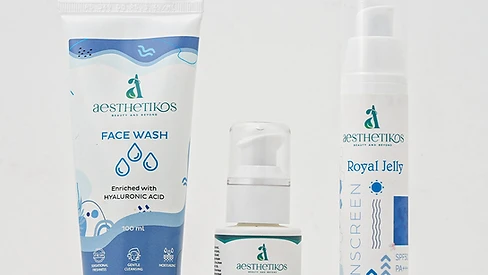
Dry or Dehydrated Skin? Best Hyaluronic Acid Skincare Routine for Lasting Hydration
Understanding dry and dehydrated skin, and how a Hyaluronic Acid skincare routine with a Hyaluronic Acid Face Wash, Hyaluronic Acid Serum, Hyaluronic Acid Moisturizer, and SPF 50 Sunscreen can help restore healthy-looking skin.
Your skin can look oily and still be dehydrated.
It can feel dry even after you have applied a moisturiser.
It can appear perfectly comfortable in the morning and, by late afternoon, begin to feel tight, dull or strangely “stretched.”
And sometimes, adding another layer of moisturiser doesn't seem to solve the problem at all.
Why?
Because dry skin and dehydrated skin are not quite the same thing.
One describes a skin type that tends to lack sufficient oils or lipids. The other describes a skin condition in which the skin lacks water. And because the two can occur together, understanding what your skin is actually asking for is the first step towards caring for it intelligently.
For Aesthetikos, that distinction matters.
The brand's philosophy places long-term skin health, ingredient transparency and evidence-backed actives ahead of trend-driven skincare.
So rather than thinking of hydration as a single serum or moisturiser, it may be more useful to think of it as a complete skin strategy: cleanse gently, replenish water, reinforce the barrier and protect what you have restored.
Dry Skin vs Dehydrated Skin: What's the Difference?
Let's make this simple.
Dry skin primarily lacks oil.Dehydrated skin primarily lacks water.
Dry skin is generally considered a skin type. It may feel rough, flaky or uncomfortable and can have a weakened lipid barrier.
Dehydration, however, is a condition that can affect almost any skin type—including oily and combination skin.
That's why someone can experience excess oil around the nose or forehead while their cheeks simultaneously feel tight or their complexion looks tired.
A compromised barrier can also allow water to escape more readily from the skin. Dermatology researchers measure this through transepidermal water loss, or TEWL—the amount of water that passes through the outermost layer of the skin and evaporates. Higher TEWL is generally associated with impaired skin-barrier function.
And the numbers show just how variable water loss can be: a large meta-analysis covering healthy adults reported TEWL estimates ranging from approximately 2.3 g/m²/h to 44 g/m²/h depending on the body site.
So skin hydration isn't simply about “putting water on your face.”
It's about helping skin attract it, retain it and reduce unnecessary loss.
What Does Dehydrated Skin Look Like?
Your skin doesn't send a notification saying hydration level low.
Instead, it tends to communicate through changes in how it looks and feels.
Common signs can include tightness after cleansing, dullness, rough texture, increased visibility of fine dehydration lines, loss of bounce, makeup settling unevenly, or skin that feels simultaneously oily and uncomfortable.
Environmental exposure matters too.
Research examining pollution and TEWL found that all studies included in the review that investigated pollution reported increased TEWL among people exposed to particulate matter or nitrogen dioxide, although the effects of seasons and climate were less consistent.
Add air conditioning, cleansing habits, UV exposure and everyday environmental stress, and hydration becomes less of a “winter skincare” conversation and more of an everyday skin-health conversation.
Why Hyaluronic Acid Is Essential for Dry & Dehydrated Skin
Hyaluronic Acid—or HA—is naturally associated with water-binding and skin hydration, which explains why it has become one of skincare's best-known humectants.
But there is an important nuance.
Hydration isn't only about attracting water. It is also about keeping that hydration where your skin needs it.
That is why the Aesthetikos HA range combines Hyaluronic Acid with complementary ingredients rather than expecting one ingredient to do everything.
Think of healthy hydration as a four-part system:
Cleanse without unnecessarily stripping → replenish hydration → support the moisture barrier → protect the skin during the day.
That philosophy is reflected directly in Aesthetikos' portfolio architecture.
And that brings us to the four-product hydration ritual.
STEP 1 — CLEANSE
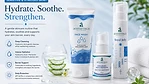
Aesthetikos Hyaluronic Acid Face Wash – A Gentle Face Wash for Dry Skin
We've almost been conditioned to associate a squeaky-clean feeling with effective cleansing.
But that tight sensation after washing isn't necessarily something to celebrate.
For dry or dehydrated skin, cleansing should remove dirt, impurities and everyday build-up without making the skin feel stripped afterwards.
The Aesthetikos Hyaluronic Acid Face Wash was designed around precisely this concern.
According to the brand's formulation deck, it contains 1.5% Hyaluronic Acid, along with hydration-supporting ingredients and gentle glucoside-based surfactants. The formulation also incorporates 5% Aloe Extract, 2% Manjishtha, 2% Licorice Root Extract, 1% Green Tea Extract and 1% Niacinamide, alongside allantoin and other hydration-supporting components.
Why does that combination matter?
Hyaluronic Acid helps support hydration.
Aloe Vera contributes a soothing dimension.
Licorice Root and Green Tea extracts bring antioxidant and calming support.
Niacinamide complements the formulation's skin-barrier philosophy.
And importantly, the cleanser uses gentle surfactants including Decyl Glucoside and Coco Glucoside, rather than building its cleansing story around aggressive stripping.
For anyone searching for the best facewash for dry skin, the real question shouldn't simply be:
"How well does it clean?"
It should also be:
"How does my skin feel after I rinse it away?"
Cleansing is not supposed to be the moment your hydration routine starts losing ground.
If you're looking for a Hyaluronic Acid Face Wash, Hydrating Face Wash, or the best face wash for dry skin, choose a cleanser that removes impurities without disrupting your skin barrier.
STEP 2 — TREAT
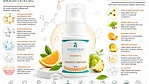
Aesthetikos Hyaluronic Acid + Pentavitin Serum: Because Instant Hydration Isn't the Same as Lasting Hydration
This is where Aesthetikos' hydration story becomes particularly interesting.
A typical Hyaluronic Acid serum focuses on delivering hydration.
Aesthetikos pairs HA with Pentavitin, alongside ingredients selected to address hydration, barrier support, calmness and uneven-looking skin tone.
The formulation deck describes 1.5% Hyaluronic Acid paired with Pentavitin, a plant-derived carbohydrate complex designed to support prolonged hydration. It also incorporates 1.5% Alpha Arbutin, 3% Niacinamide, 0.5% Panthenol and Allantoin, together with botanical ingredients including Aloe Vera, Coffee Seed Oil, Hemp Seed Oil, Ashwagandha Root Extract and Hibiscus Extract.
That creates a more multidimensional serum.
Hyaluronic Acid: replenish
HA helps attract and retain moisture, contributing to that supple, hydrated feeling people often associate with well-moisturised skin.
Pentavitin: prolong
The Aesthetikos formulation uses Pentavitin to complement HA and support longer-lasting moisture retention. The brand deck positions the HA + Pentavitin combination specifically as its hero platform for dehydration.
Niacinamide + Panthenol: support
Hydrated skin also needs an effective barrier. Niacinamide and Panthenol add another dimension by complementing the formula's barrier-supporting and soothing intent.
Alpha Arbutin: beyond hydration
Dryness and dehydration can make the complexion appear dull and uneven. Alpha Arbutin allows the serum to address the appearance of uneven tone alongside hydration rather than treating moisture as an isolated concern.
In other words, this isn't just about making thirsty skin feel wet for a few minutes.
It's about creating an environment in which skin can look plumper, calmer, fresher and more resilient.
STEP 3 — HYDRATE
Aesthetikos Hyaluronic Acid Moisturizer: Hydration Meets Barrier Care
If a serum attracts hydration, a thoughtfully formulated moisturiser helps support the environment that keeps skin comfortable.
This distinction matters.
Ceramides are major components of the lipid structures within the stratum corneum and play an important role in the skin's permeability barrier. Scientific reviews have linked reduced ceramide content with dry, barrier-disrupted skin, while studies of appropriately formulated topical ceramides have reported improvements in hydration and barrier function.
That's why the Aesthetikos Hyaluronic Acid Moisturizer goes beyond HA alone.
Its formulation includes Hyaluronic Acid together with four types of ceramides, plus Licorice Root Extract, Aloe Vera and Centella Asiatica for a soothing formulation. Panthenol, Pentylene Glycol and Squalene complement the hydration system.
The result is an important distinction between simply moisturising the surface and approaching hydration through water + barrier support.
If you're looking for a Hyaluronic Acid Moisturizer, Dry Skin Moisturizer, Daily Face Moisturizer or Moisturizer for Dry Skin, this is the formulation principle worth paying attention to.
Hydrate the skin. Then help the barrier retain that hydration.
That is where HA and ceramides make sense together.
HA supports hydration.
Ceramides support the lipid architecture associated with the skin barrier.
Squalene and complementary humectants/emollients help create a more comfortable moisturising experience.
And Aloe, Licorice and Centella add a soothing botanical layer.
The objective isn't an artificially greasy finish.
It's skin that feels comfortable, supple and cared for.
STEP 4 — PROTECT
Aesthetikos HA + Royal Jelly Sunscreen SPF50 PA+++: Don't Finish a Hydration Routine Without Protection
Morning skincare shouldn't end at moisturiser.
UV protection remains one of the most important components of daytime skincare, and for dehydrated skin, sunscreen texture and formulation can determine whether someone actually wants to use it every day.
The Aesthetikos HA + Royal Jelly Sunscreen SPF50 PA+++ was designed as a hybrid sunscreen combining mineral filters including Zinc Oxide and Titanium Dioxide with other UV-filtering technology, while incorporating 1.5% Hyaluronic Acid, Sweet Almond Oil, phospholipids and Vitamin E.
But the ingredient that gives this sunscreen its distinctive identity is 2% Royal Jelly Extract.
The formulation deck describes Royal Jelly as a nutrient-rich matrix containing amino acids and vitamins, incorporated to add a nourishing dimension to sun protection.
This changes the conversation from:
“I need SPF.”
to:
“Can my SPF protect while remaining compatible with my hydration-focused routine?”
For dry or dehydrated skin, that's a meaningful difference.
Because the final step of a routine shouldn't undo the comfort created by the first three.
The Aesthetikos 360° Hydration Philosophy
The strength of this four-product system is not that every bottle contains Hyaluronic Acid.
It is that each stage has a different job.
Cleanse:Hyaluronic Acid Face Wash helps cleanse while supporting a comfortable, hydrated skin feel.
Treat:Hyaluronic Acid + Pentavitin Serum for Deep Hydration delivers a concentrated hydration-focused step with barrier-supporting, soothing and tone-supporting ingredients.
Hydrate:Hyaluronic Acid Moisturizer combines hydration with ceramides and complementary emollient and botanical ingredients to support the moisture barrier.
Protect:HA + Royal Jelly Sunscreen SPF50 PA+++ brings daytime UV protection together with hydration and nourishment.
That is a much more complete answer to dehydrated skin than simply adding another HA serum to an otherwise aggressive skincare routine.
Frequently Asked Questions
Can oily skin be dehydrated?
Yes. Oil and water are different components of skin physiology. Someone with oily skin can still experience insufficient skin hydration or barrier disruption. This is why dehydration shouldn't automatically be treated with heavy, greasy products.
Is Hyaluronic Acid good for dry skin?
Hyaluronic Acid is widely used as a hydration-supporting humectant, but dry skin may benefit from a formulation strategy that also includes barrier-supporting lipids and emollients. This is one reason Aesthetikos pairs HA with ingredients such as ceramides, squalene, Panthenol and soothing botanicals in its moisturiser.
What is the difference between a Hyaluronic Acid serum and moisturizer?
Think of them as complementary rather than interchangeable.
A serum can deliver concentrated humectants and supporting actives, while a Hyaluronic Acid Moisturizer adds emollient and barrier-supporting components that help maintain skin comfort and reduce moisture loss.
Should I use HA on damp skin?
Applying a hydrating serum to slightly damp skin can work well for many people, followed by a moisturiser to complete the hydration routine. Product directions should still take priority.
What skincare routine is best for dehydrated skin?
Keep it intelligent rather than complicated:
Gentle cleanse → hydration serum → barrier-supporting moisturizer → broad-spectrum sunscreen during the day.
At night, sunscreen naturally drops out of the routine.
Is Hyaluronic Acid Moisturizer good for dry skin?
Yes. A Hyaluronic Acid Moisturizer helps replenish moisture while supporting the skin barrier, making it ideal for dry and dehydrated skin.
Which face wash is best for dry skin?
A gentle Hyaluronic Acid Face Wash helps cleanse the skin without stripping away essential moisture, making it suitable for dry and dehydrated skin.
Can I use Hyaluronic Acid every day?
Yes. Hyaluronic Acid can be used daily in both morning and evening skincare routines for continuous hydration.
Do I need sunscreen if I have dry skin?
Yes. A SPF 50 Sunscreen protects dry and dehydrated skin from UV damage while helping maintain skin health.
Hydration Is Not a Trend. It's a Skin Function.
Perhaps that's the most important takeaway.
Healthy-looking skin isn't simply skin that has been coated with enough product to appear glossy.
It is skin whose relationship with water and its protective barrier is being respected.
Research consistently identifies TEWL as an important measure of skin-barrier integrity, while ceramides are recognised as fundamental components of the epidermal permeability barrier.
Which is why a more intelligent approach to dry and dehydrated skin looks beyond a single “hero ingredient.”
Hyaluronic Acid can attract and support hydration.
Pentavitin can complement a longer-lasting hydration strategy.
Ceramides can support the skin barrier.
Soothing botanicals can help make the routine more comfortable.
And sunscreen helps protect skin through the day.
Together, they form a much more complete philosophy:
Cleanse. Replenish. Strengthen. Protect.
That is the thinking behind the Aesthetikos Hyaluronic Acid Hydration Range—a four-step approach designed around hydration, barrier support and everyday skin wellness, consistent with the brand's larger philosophy of combining evidence-backed actives, transparent ingredient selection and a premium skincare experience.
Because truly hydrated skin isn't about chasing a temporary glow.
It's about creating the conditions in which healthy-looking skin can thrive—today, tomorrow and over time.
Healthy skin starts with the right routine—not just one product. A complete skincare routine featuring a Hyaluronic Acid Face Wash, Hyaluronic Acid Serum, Hyaluronic Acid Moisturizer, and SPF 50 Sunscreen can help keep skin hydrated, healthy-looking, and protected every day.