Dull & Uneven Skin? Best Vitamin C Skincare Routine for Brighter, Even-Toned Skin
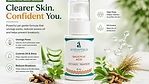
Dull & Uneven Skin? Best Vitamin C Skincare Routine for Brighter, Even-Toned Skin
How the Aesthetikos Vitamin C skincare range combines a Vitamin C Face Wash, Vitamin C Serum, Vitamin C Moisturizer, and Vitamin C Sunscreen SPF 50 to help improve dull skin and uneven skin tone.
Some changes in our skin happen dramatically.
A breakout appears overnight. A patch suddenly feels dry. Redness is immediately noticeable.
Dull skin is different.
It tends to creep in quietly.
One day, you notice your complexion doesn't look quite as fresh as it used to. Your skin seems tired even when you aren't. Makeup needs more work. The natural luminosity you remember appears muted. And perhaps most frustratingly, the colour and texture of your skin don't seem as even as before.
The instinctive response is often: I need something to make my skin glow.
But healthy-looking radiance isn't something that simply sits on the surface.
Dullness can be influenced by multiple factors—from accumulated dead skin cells and dehydration to uneven pigmentation, environmental exposure and oxidative stress. That means addressing dull and uneven-looking skin requires more than chasing an instant glow.
It requires understanding why skin loses its luminosity in the first place.
As a dermatologist-formulated skincare brand in India, Aesthetikos focuses on evidence-backed ingredients that help restore brighter, healthier-looking skin while supporting the skin barrier.
What Is Dull Skin?
Dullness isn't a medical diagnosis. It's a visual description of skin that appears to have lost some of its natural brightness, clarity or vitality.
Instead of reflecting light evenly, the complexion can look flat, tired or lacklustre.
It may be accompanied by:
uneven-looking skin tone
visible pigmentation or post-acne marks
rough or inconsistent texture
dryness or dehydration
reduced radiance
areas that appear darker than surrounding skin
The underlying causes can vary considerably.
UV exposure is particularly important because solar radiation contributes to visible signs of photoageing and pigmentation. Oxidative stress generated by UV exposure can affect cellular structures in the skin, while repeated sun exposure is associated with uneven pigmentation and other visible signs of ageing.
This is also why brightening skincare and sunscreen shouldn't be viewed as two completely separate conversations.
You cannot intelligently address uneven-looking skin without thinking about what is contributing to it every day.
Why Does Skin Become Dull and Uneven?
Think of your skin as an extraordinarily sophisticated protective interface between your body and the outside world.
Every day, it encounters UV radiation, pollution, climatic changes and other environmental stressors.
At the same time, skin is continuously renewing itself.
When this delicate balance is disrupted, the complexion may begin to look less uniform.
One important factor is melanin, the pigment responsible for much of our skin colour. Melanin is produced by melanocytes and transferred to surrounding keratinocytes. Increased or uneven melanin production can contribute to visible hyperpigmentation.
Sunlight is a major trigger.
Research into photoageing has established that chronic UV exposure contributes significantly to premature visible skin ageing, including pigmentation changes, roughness and loss of elasticity.
Then there is oxidative stress.
Reactive oxygen species generated through UV and environmental exposure can overwhelm the skin's natural antioxidant defence systems.
Which brings us to one of skincare's most extensively studied antioxidants:
Vitamin C.
Benefits of Vitamin C for Dull & Uneven Skin
Vitamin C is often marketed as a “glow ingredient.”
That description doesn't really do it justice.
Topical Vitamin C has been studied for its antioxidant activity, role in collagen biology and influence on pathways involved in pigmentation.
But there is an important formulation challenge.
Pure L-Ascorbic Acid—the form most consumers associate with Vitamin C—can be unstable. Exposure to factors such as air, light and formulation conditions can affect stability.
This is why skincare science has developed different Vitamin C derivatives designed to offer varying combinations of stability, tolerability and activity.
And this distinction is particularly important in the Aesthetikos Vitamin C range.
Rather than placing the exact same Vitamin C molecule into every product, the formulations use different stabilised derivatives according to the role of the product.
The result is not simply four products containing Vitamin C.
It is a four-stage brightening system.
Cleanse → Treat → Hydrate → Protect
Let's look at what each step contributes.
STEP 1 — CLEANSE
Aesthetikos Vitamin C Face Wash: Brightening Begins Before the Serum
A cleanser stays on your face for a relatively short time, so formulation matters.
The Aesthetikos Vitamin C Face Wash combines 2% Ethyl Ascorbic Acid with 4% Niacinamide. According to the formulation deck, Ethyl Ascorbic Acid was selected as a stable Vitamin C derivative, while Niacinamide complements the formula's brightening and skin-supportive positioning.
But the formulation isn't built around brightness alone.
It also incorporates Neem and Tea Tree extracts to support its positioning for oily and acne-prone skin, while Licorice Root Extract complements the formula's approach to post-acne marks and uneven-looking tone.
Then comes something easily overlooked in a brightening cleanser:
hydration.
The deck specifically identifies Sodium PCA as a hydration-supporting ingredient, while the cleansing base uses surfactants including Sodium Lauroyl Sarcosinate, Cocamidopropyl Betaine and Decyl Glucoside.
Why does this matter?
Because the goal shouldn't be to aggressively strip the skin in pursuit of brightness.
A better starting point is:
Cleanse effectively while respecting the skin, then allow targeted treatment products to do their work.
If you're searching for the best Vitamin C Face Wash or a brightening face wash for everyday use, choose one that cleanses effectively without compromising your skin barrier.
STEP 2 — TREAT
Aesthetikos Vitamin C Serum: A Multi-Pathway Approach to Dullness & Uneven Tone
If the face wash sets the stage, the Vitamin C Serum is the concentrated treatment step in the routine.
And its formulation reveals an important aspect of the Aesthetikos philosophy: don't make one active solve every problem alone.
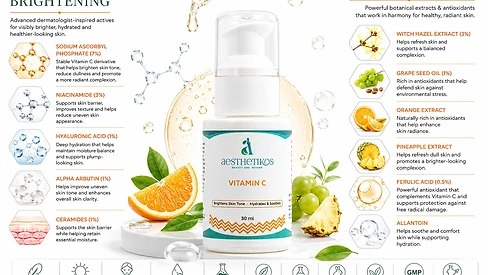
The hero ingredient here is 7% Sodium Ascorbyl Phosphate (SAP)—a stable derivative of Vitamin C selected by the brand as an alternative to conventional L-Ascorbic Acid.
But the brightening architecture doesn't stop there.
Aesthetikos combines SAP with:
1% Alpha Arbutin + 0.5% Kojic Acid
The rationale is straightforward: uneven-looking skin and pigmentation are complex concerns, so the formulation combines complementary brightening ingredients rather than relying exclusively on Vitamin C.
The serum then adds another layer.
Vitamin E and Ferulic Acid contribute antioxidant support, while Grape Seed Oil is also included for its antioxidant positioning.
And because effective skincare isn't simply about adding stronger actives, the formulation includes ceramides, Hyaluronic Acid, Witch Hazel Extract, Glycerin and Betaine as supporting ingredients.
This gives the serum a broader objective:
Brighten. Support more even-looking tone. Provide antioxidant care. Hydrate. Support the barrier.
That's significantly more sophisticated than simply putting “Vitamin C” on the front of a bottle.
Why Alpha Arbutin + Kojic Acid + Vitamin C Is Interesting
Uneven-looking skin rarely has only one visible manifestation.
There may be an overall lack of brightness alongside specific darker areas or marks left behind after blemishes.
That creates two slightly different skincare goals:
overall luminosity and targeted improvement in the appearance of uneven tone.
Vitamin C contributes to the brightening and antioxidant story.
Alpha Arbutin is widely used in skincare formulations targeting hyperpigmentation and uneven tone.
Kojic Acid is another familiar ingredient in pigmentation-focused skincare.
By combining them, Aesthetikos has designed its Vitamin C Serum around multi-ingredient brightening rather than single-active marketing.
That aligns directly with the brand's broader philosophy of pairing evidence-backed actives and selecting ingredients for a defined purpose.
STEP 3 — HYDRATE
Aesthetikos Vitamin C Moisturizer: Brightening Shouldn't Come at the Expense of the Barrier
One of the problems with aggressive brightening routines is that consumers can become so focused on pigmentation that they forget the skin barrier.
A compromised, uncomfortable or dehydrated complexion rarely looks luminous.
Aesthetikos therefore takes a different approach with its Vitamin C Moisturizer.
Here, the Vitamin C molecule changes again.
Instead of SAP or Ethyl Ascorbic Acid, the moisturiser uses 3% Magnesium Ascorbyl Phosphate (MAP), another stable Vitamin C derivative.
The formulation then brings in ceramides for barrier support and 2% Niacinamide to complement skin texture and tone care.
But this is also where the sensorial side of skincare matters.
The base incorporates Avocado Oil, Shea Butter, Grape Seed Oil, Pineapple Fruit Extract and Hydrolyzed Yeast Protein, designed around a soft, comfortable skin feel rather than a greasy finish.
The antioxidant system combines Vitamin C + Vitamin E + Ferulic Acid, while the formula also includes Centella Asiatica-derived skincare support. Allantoin, Inositol and Taurine are incorporated into the hydration and water-balance story.
So while the serum is the concentrated brightening treatment, the moisturiser performs a different role:
supporting brightness while nourishing, hydrating and reinforcing the skin-barrier strategy.
Because radiance isn't only about pigment.
It is also about how smooth, hydrated and healthy the surface of the skin appears.
STEP 4 — PROTECT
Aesthetikos Vitamin C Sunscreen SPF50 PA+++: The Step a Brightening Routine Cannot Afford to Ignore
Imagine spending weeks carefully addressing the appearance of uneven tone while repeatedly exposing unprotected skin to the very UV radiation associated with pigmentation.
That is why sunscreen is not an optional final paragraph in a brightening routine.
It is part of the strategy.
The Aesthetikos Vitamin C Sunscreen SPF50 PA+++ combines its UV protection system with Ethyl Ascorbic Acid, extending the brightening philosophy into the daytime protection step.
According to the formulation deck, the sunscreen combines 2% stable Ethyl Ascorbic Acid with 2% bio-identical Squalane, alongside Hyaluronic Acid and a phospholipid-based filter system.
Aloe and Glycerin add calming and hydration support, while Acacia Senegal Gum contributes to the formulation's smoothing, primer-like sensory effect.
This is an important evolution in how we think about sunscreen.
The question isn't merely:
“Does my sunscreen have SPF?”
It can also be:
“How does my sunscreen fit into the rest of my skincare strategy?”
For a Vitamin C routine focused on dullness and uneven-looking skin, protection belongs inside the system—not outside it.
One Concern. Four Different Vitamin C Strategies.
This is perhaps the most interesting aspect of the Aesthetikos Vitamin C range.
Look closely and you'll notice that the brand hasn't simply repeated one formulation four times.
Vitamin C Face Wash
2% Ethyl Ascorbic Acid + 4% Niacinamide
Designed around brightening, cleansing and support for skin prone to oiliness and post-blemish marks.
Vitamin C Serum
7% Sodium Ascorbyl Phosphate + 1% Alpha Arbutin + 0.5% Kojic Acid
The concentrated treatment step targeting brightness and uneven-looking tone, supported by antioxidants and hydration/barrier ingredients.
Vitamin C Moisturizer
3% Magnesium Ascorbyl Phosphate + 2% Niacinamide + Ceramides
Designed to combine everyday brightening with hydration, antioxidant support and barrier care.
Vitamin C Sunscreen SPF50 PA+++
2% Ethyl Ascorbic Acid + 2% Squalane + Hyaluronic Acid
Bringing the brightening philosophy into daytime UV protection while supporting hydration and skin comfort.
That's what makes it a 360° Vitamin C routine rather than four unrelated products carrying the same ingredient name.
What Should a Routine for Dull & Uneven Skin Actually Look Like?
It doesn't need twelve steps.
It needs the right ones.
Morning
Cleanse → Treat → Hydrate → Protect
Vitamin C Face Wash↓Vitamin C Serum↓Vitamin C Moisturizer↓Vitamin C Sunscreen SPF50 PA+++
Evening
Cleanse → Treat → Hydrate
Vitamin C Face Wash↓Vitamin C Serum↓Vitamin C Moisturizer
Consistency matters more than creating an unnecessarily complicated shelf of actives.
And sunscreen remains particularly important when pigmentation and uneven-looking tone are key concerns.
Frequently Asked Questions
Is Vitamin C good for dull skin?
Vitamin C is widely used in skincare for its antioxidant and brightening properties. It can form part of a routine designed to improve the appearance of dullness and uneven tone, particularly when combined with appropriate hydration and daily UV protection.
Can Vitamin C help with uneven skin tone?
Vitamin C is commonly used in formulations targeting uneven-looking skin. Aesthetikos goes further by combining its Vitamin C serum with Alpha Arbutin and Kojic Acid, creating a multi-active approach to visible unevenness.
Which Vitamin C is used in Aesthetikos products?
Interestingly, there isn't just one.
The Vitamin C Face Wash and Sunscreen use Ethyl Ascorbic Acid; the Vitamin C Serum uses Sodium Ascorbyl Phosphate (SAP); and the Vitamin C Moisturizer uses Magnesium Ascorbyl Phosphate (MAP).
Can beginners use Vitamin C skincare?
The Aesthetikos Vitamin C formulations have been developed around stable Vitamin C derivatives and supporting ingredients rather than relying solely on high-strength L-Ascorbic Acid. Individual skin sensitivity varies, however, so patch testing a new skincare product remains sensible.
Can I use Vitamin C and Niacinamide together?
Modern skincare formulations commonly combine them. In fact, Aesthetikos deliberately uses the combination in both its Vitamin C Face Wash and Vitamin C Moisturizer as part of their overall brightening and skin-supportive formulation architecture.
Do I still need sunscreen when using Vitamin C?
Yes. A brightening routine aimed at uneven-looking tone should include appropriate daytime UV protection. Vitamin C should not be considered a replacement for sunscreen.
Which Vitamin C serum is best for dull skin?
A stable Vitamin C Serum with supporting ingredients like Alpha Arbutin and Kojic Acid helps improve dull skin, uneven tone and post-acne marks while providing antioxidant benefits.
Can Vitamin C reduce pigmentation?
Vitamin C is commonly used in skincare to improve the appearance of pigmentation and uneven skin tone, especially when paired with daily sunscreen.
Can I use Vitamin C every day?
Yes. Vitamin C skincare products can generally be used daily as part of your morning and evening routine, depending on the product instructions.
Is Vitamin C Moisturizer good for daily use?
Yes. A Vitamin C Moisturizer provides hydration, antioxidant support and barrier care, making it suitable for everyday skincare.
Don't Chase Glow. Build Healthier-Looking Skin.
There is something appealing about the skincare industry's obsession with “glow.”
But perhaps we've made it too superficial.
Real radiance isn't glitter.
It isn't oiliness.
And it isn't the temporary shine left behind by a product.
Healthy-looking luminosity comes from skin that appears hydrated, smooth, even and well cared for.
That requires more than one fashionable ingredient.
It requires intelligent cleansing.
Targeted actives.
Barrier-conscious hydration.
Antioxidant support.
And consistent UV protection.
This is where the Aesthetikos Vitamin C philosophy becomes more interesting than simply creating another Vitamin C serum.
Different forms of Vitamin C have been selected across different stages of the routine. Supporting ingredients have been incorporated according to the role each product needs to perform. And the overall system follows the brand's established Cleanse → Treat → Hydrate → Protect portfolio architecture.
It reflects a larger idea at the heart of Aesthetikos: skincare should sit at the intersection of clinical thinking, ingredient transparency, effective actives and a premium everyday experience.
So if your skin has started looking dull, tired or uneven, perhaps the answer isn't simply to search for more glow.
Give it something more meaningful.
Cleanse intelligently. Treat deliberately. Hydrate generously. Protect consistently.
Because beautiful skin doesn't need to look artificially illuminated.
When skin looks healthy, comfortable and even, its radiance has a way of showing up on its own.